

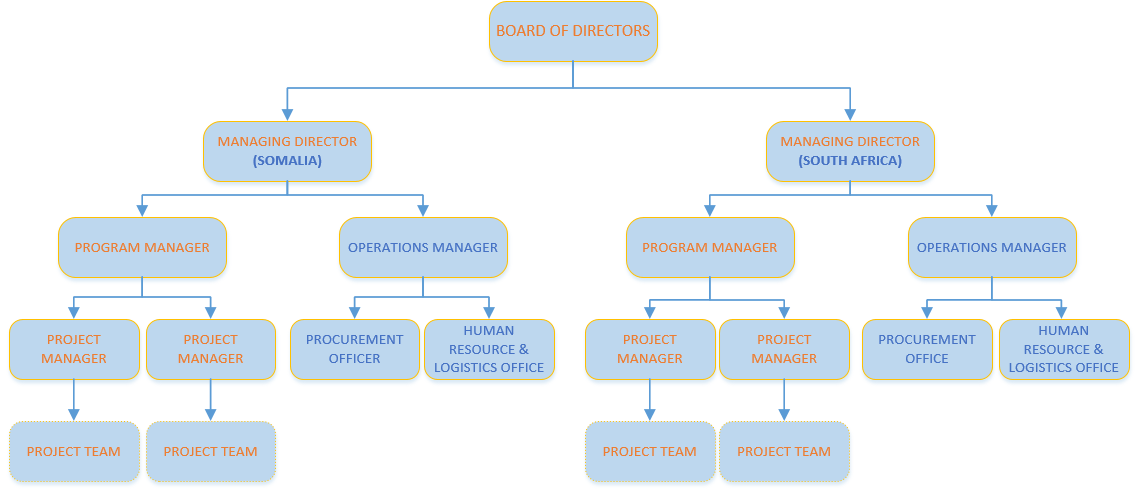
Critical Roles & Responsibilities
- Program Manager
- Operations Manager
- Project Manager
- Procurement Office
- HR And Logistics
Program Manager
Responsibilities
- Our managers are responsible for enlisting teams
- Implementing strategies (short, medium, and long term)
- Measuring Return On Investment
- Overseeing collaboration across project teams and managing project portfolio
- Defining success metrics
- Evaluating success metrics
- Coordinate and track the progress of projects
- Analysing policies, goals, and objectives of the program
- Liaise between different project leaders
- Evaluating overall program and project success
- Developing strategies for continued program advancement
- Defining success metrics
Operations Manager
Responsibilities
- Our Operations managers need to have a 360-degree overview of everything going on around them
- They facilitate the success of each relevant department, planning activity, tweaking processes, managing inventory, and ensuring compliance with best practices.
- Their operational decisions involve a wide range of stakeholders from across their business and they are a hub for advice and strategic input
- They are party to all key financial decisions and oversee the procurement and operational budgets
- Quality assurance and compliance form a large part of their responsibilities, with health and safety governance ensuring that no disasters happen
- Our Operations managers are often responsible for working hand in hand with project managers in ensuring efficient project management and workforce deployment
- On the people side, they are coaches, mentors, and shining examples of how to do things properly
Project Manager
- Meeting deadlines
- Staying within the pre-set budget
- Delegating tasks to team members
- Completing deliverable tasks
- Coordinating time and resources
- Reporting to the program manager
- Organizing the overall team
- Cost estimations and budgeting projects
- Working with customers to ensure project scope
- Monitoring the progress of the team
- Answering team members’ questions and concerns
- Developing tasks and timelines
- Managing overall project risk
- Managing and updating reports and documentation
- Clarify project scope and plan
- Develop policies and procedures to achieve overall objectives
Procurement Office
- Review procurement documents and prepare orders
- Negotiate contracts with suppliers
- Develop and monitor cost-reduction strategies
- Develop and monitor inventory control procedures
- Develop and monitor purchasing policies
- Manage vendors
- Develop and implement IT policy within the procurement department
- Monitor supplier performance
- Meet with suppliers when needed
- Understand, analyze, and evaluate enterprise-wide procurement requirements for products and services
Human Resource & Logistics Office
- Preparing job descriptions, advertising vacant positions, and managing the employment process.
- Orientating new employees and training existing employees.
- Monitoring employee performance.
- Ensuring that all employees are organized and satisfied in their work environment.
- Overseeing the health and safety of all employees.
- Implementing systematic staff development procedures.
- Providing counselling on policies and procedures.
- Ensuring meticulous implementation of payroll and benefits administration.
- Communicating with staff about issues affecting their performance.
- Ensuring accurate and proper record-keeping of employee information in electronic and digital format.
- Coordinate and monitor supply chain operations
- Ensure premises, assets, and communication ways are used effectively
- Utilize logistics IT to optimize procedures
- Recruit and coordinate logistics staff (e.g. truck drivers) according to availabilities and requirements
- Supervise orders and arrange stocking of raw materials and equipment to ensure they meet needs
- Communicate with suppliers, retailers, customers, etc. to achieve profitable deals and mutual satisfaction
- Plan and track the shipment of final products according to customer requirements
- Keep logs and records of warehouse stock, executed orders, etc.
- Prepare accurate reports for upper management